
Epics Uncut
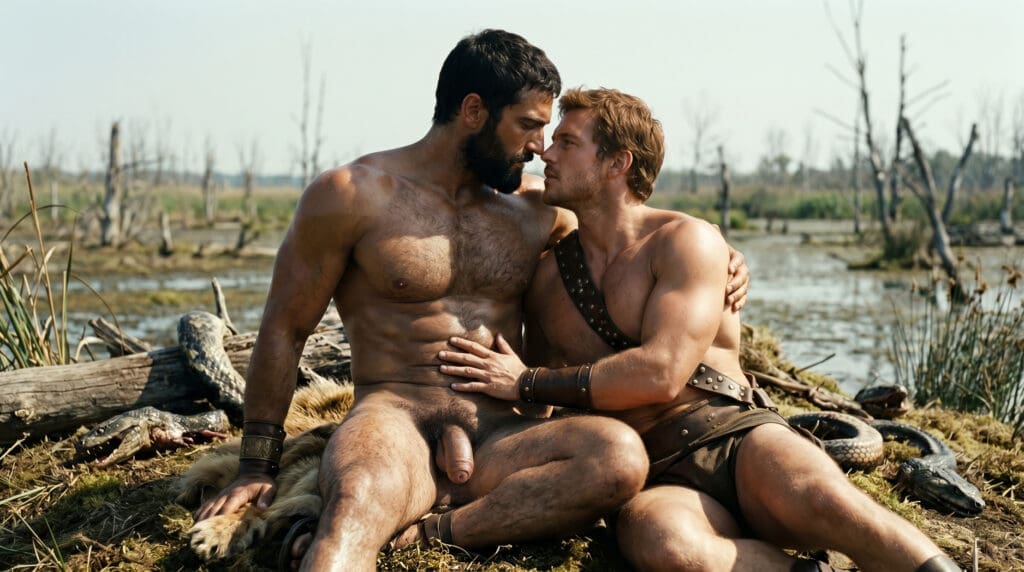
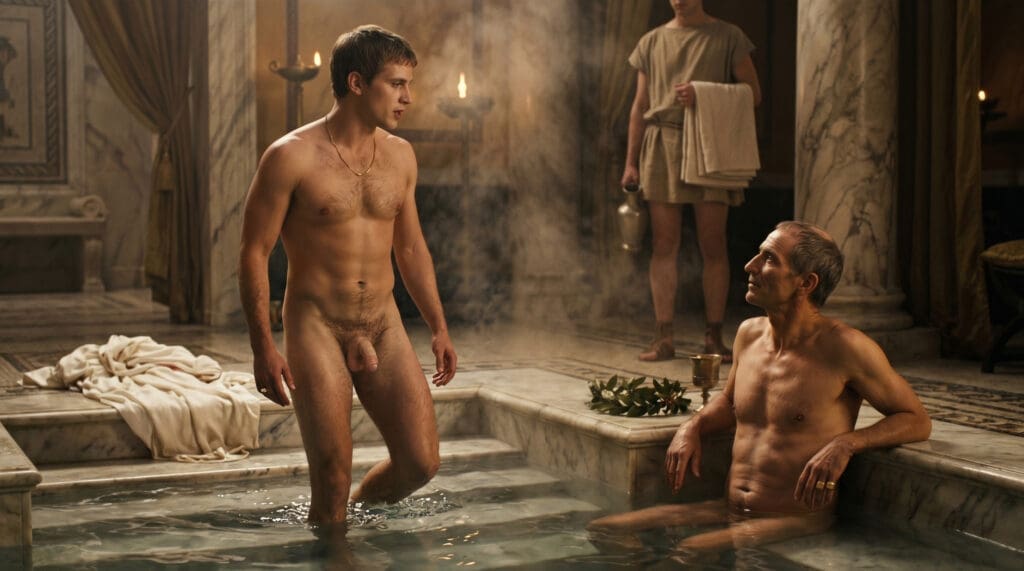
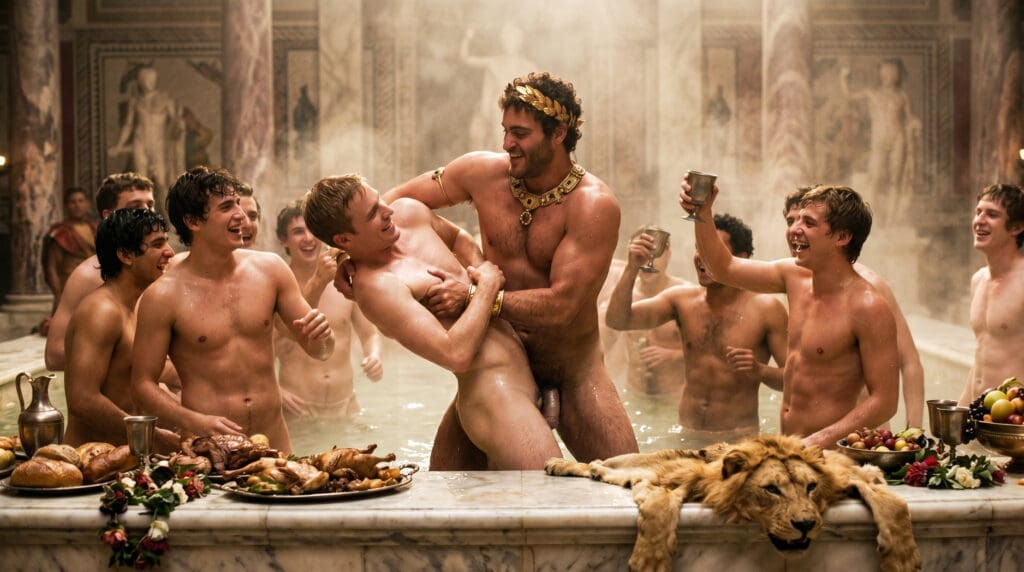
For as long as the epic genre has existed, it has coded male desire as brotherhood, rivalry, or fate — anything but what it actually was. Classical antiquity gay art has always existed in the historical record — Achilles and Patroclus, Hadrian and Antinous, the court around Alexander. What’s never existed, until this wave of films, is Hollywood actually showing it. Epics Uncut is NUBRONZE’s ongoing survey of the films finally refusing that alibi, told with the same scale and seriousness the genre has always claimed for itself, minus the closet.

An Old Genre, Finally Uncoded
Desire Already on the Record
The move isn’t invention so much as correction. Where history already documents the desire — Achilles and Patroclus, Hadrian’s devotion to Antinous, the court around Alexander — these films simply stop looking away. What reads as a bold reimagining is often just the plain historical record, restored rather than softened for an audience that was never actually being protected from anything, just kept from seeing it. The Spartan Bred works the same territory from a single film rather than a survey — Niko Kallias building one coherent world where this page surveys dozens.
When the Figure Does the Work
Where the record is thinner, the mythology does the legitimizing work instead: a figure large enough in the cultural imagination that giving him a lover, or several, reads as plausible rather than invented. Alexander gets two registers rather than one — Hephaestion, the companion-equal his campaigns were actually built on, and Bagoas, the Persian favorite inherited from a defeated king, exotic and asymmetrical in a completely different key. The Conqueror’s Silk holds both in the same film, dropping the public campaign for the private hours where Alexander turns from Hephaestion’s equal footing to Bagoas’s very different terms — silk, incense, a conqueror who wants two entirely different things from two entirely different men. Caesar gets The Last Triumph, which takes seriously what the ancient sources only ever insinuated — that the teenage Octavian secured his inheritance with more than loyalty — while turning the same film toward the old man’s own final year, apogee and collapse inside one frame, power at its absolute peak the moment before it ends.
The Heroes Get Undressed
And the Greek heroes finally get shown the way antiquity actually depicted them: naked, and hungry for other men, not monster-slayers with a loincloth welded on for modern comfort. The Thirteenth Labor of Hercules gives Heracles both halves at once — the colossus who beat the Nemean lion and the tender lover Iolaus knew off the record, one film refusing to pick between the myth’s muscle and its heart. Theseus and Pirithous get similar treatment elsewhere in the survey: two kings equally matched, descending into the underworld together for each other rather than for either one’s throne.
What the Camera Finally Shows
The Gladiators, As They Actually Were
Gladiators get treated as what the historical record actually says they were: not just fighters, but desired. Wealthy Roman men and women alike pursued them off the sand, and plenty of gladiators seduced their way through patrician households on the strength of their reputation alone. Bound Fighters of Rome restores that fact plainly, one of the more overlooked corners of classical antiquity gay art — arena stars wanted for reasons that had nothing to do with survival, shown here as lovers as often as fighters, chained by the ludus and drawn to each other regardless. Heated Rivalries makes a related case in a modern register — the same collision of combat and desire, just without two thousand years between the sport and the camera.
Modern Bodies, Ancient Setting
The morphology follows the same rule the genre itself has followed since the early 2000s — athletic, defined, gym-built, the register of Gladiator and 300 rather than the smooth statuary physiques 1950s and 60s peplum favored. One detail breaks from antiquity on purpose: these films show cock, plainly and often at real length, where classical sculpture famously kept its heroes modest as a mark of civilized restraint. Nothing here is coy about it — big dicks on Greek gods and Roman senators alike, exactly the opposite of what a marble original would have given them. The color grading matches the same modern instinct — contemporary contrast and warmth, not flat studio Technicolor. Four distinct tones run through the full survey — decadent and gilded for the imperial entries, hard and dust-covered for the battlefield ones, luminous for anything involving a god, and something quieter and more elegiac for the entries built around grief rather than conquest.
The Two Films NUBRONZE Keeps Coming Back To
Two entries in this wave arrived close enough together that comparing them says more than reviewing either alone — enough that NUBRONZE gave both a full dossier treatment, not just an interview, in Issue 05.
Of Walls and Men
Ash Corwin’s debut reimagines the Trojan War through instinct rather than psychology — heroes who want and take without deliberating, gods rendered fully physical rather than voices in cloud. Its Apollo, played by Lev Farris, moves between registers with real range: tender and dominant with Hyacinthus, yielding entirely to Hector in exchange for divine protection, the same actor equally convincing both ways.
The Eagle and the Laurel
David Krane works the opposite direction — quieter, built on watching rather than instinct, organizing an entire Roman-Greek epic around a centurion’s gaze. Cole Marini carries the role of Marcus Varro, on screen almost the entire runtime, often without clothes — the performance NUBRONZE’s own interview with him addresses directly, fresh from the gym, in Issue 05. Krane’s film also finds room for a senator’s disastrous choice at a gladiator selection, and a legion of soldiers who manage fear and desire in the same breath under canvas — the kind of texture a quieter film has space for that a faster one doesn’t. Where Corwin works through appetite and Krane through restraint, this piece of classical antiquity gay art exists partly to hold both approaches in the same frame. That same antiquity runs back to the centuries before photography even existed, the myths this page keeps returning to already circling the same desire.
Are these real films?
No — every title in this survey is invented, part of NUBRONZE's imagined wave of classical antiquity gay art on screen, credited openly as fiction. Historical figures like Alexander, Augustus, Caesar, Hadrian, Caligula, Nero, Mark Antony, Commodus, and Spartacus are real; the films about them are not.
Was the M2M desire in figures like Heracles, Theseus, Achilles, or Paris always part of their myths?
Yes, largely — ancient sources describe these relationships plainly. What's new here isn't the desire, and it isn't classical antiquity gay art either — both already existed. It's showing it on screen. Centuries of adaptation quietly erased or downplayed it, and these films simply stop doing that.
Is the actor Cole Marini gay or bi?
No — but he's nude for most of the film's runtime and plays M2M desire convincingly throughout, directed by a gay filmmaker who clearly knew exactly what he wanted from the performance. His full interview runs in Issue 05.
Does this series show explicit sex?
No — full nudity and unmistakable M2M desire run through nearly every entry, but the series stops short of explicit sex itself.
Why don't the penises shown in these films match historical reality?
Classical Greek sculpture actually favored small, tightly closed penises as a mark of restraint and civility — a big cock was reserved for satyrs, fools, and barbarians in the visual language of the time. These films flip that convention entirely, sized for what a modern audience actually wants to see rather than what an ancient sculptor considered virtuous.