
Original work
Not everything NUBRONZE publishes fits inside a hundred-page issue. Original Work is where the ongoing gay erotic art series live — worlds built one series at a time, running for as long as they have something left to show. Below is the current roster.

Taking the Photographer
The man behind the camera steps in front of it — nude, on record, for the first time. What happens when the one who always looks finally lets himself be seen.
Wild Male Encounters
Five men wash up on an island where only men remain. What starts as suspicion turns into something neither side saw coming — heat, curiosity, skin against skin under a Pacific sun.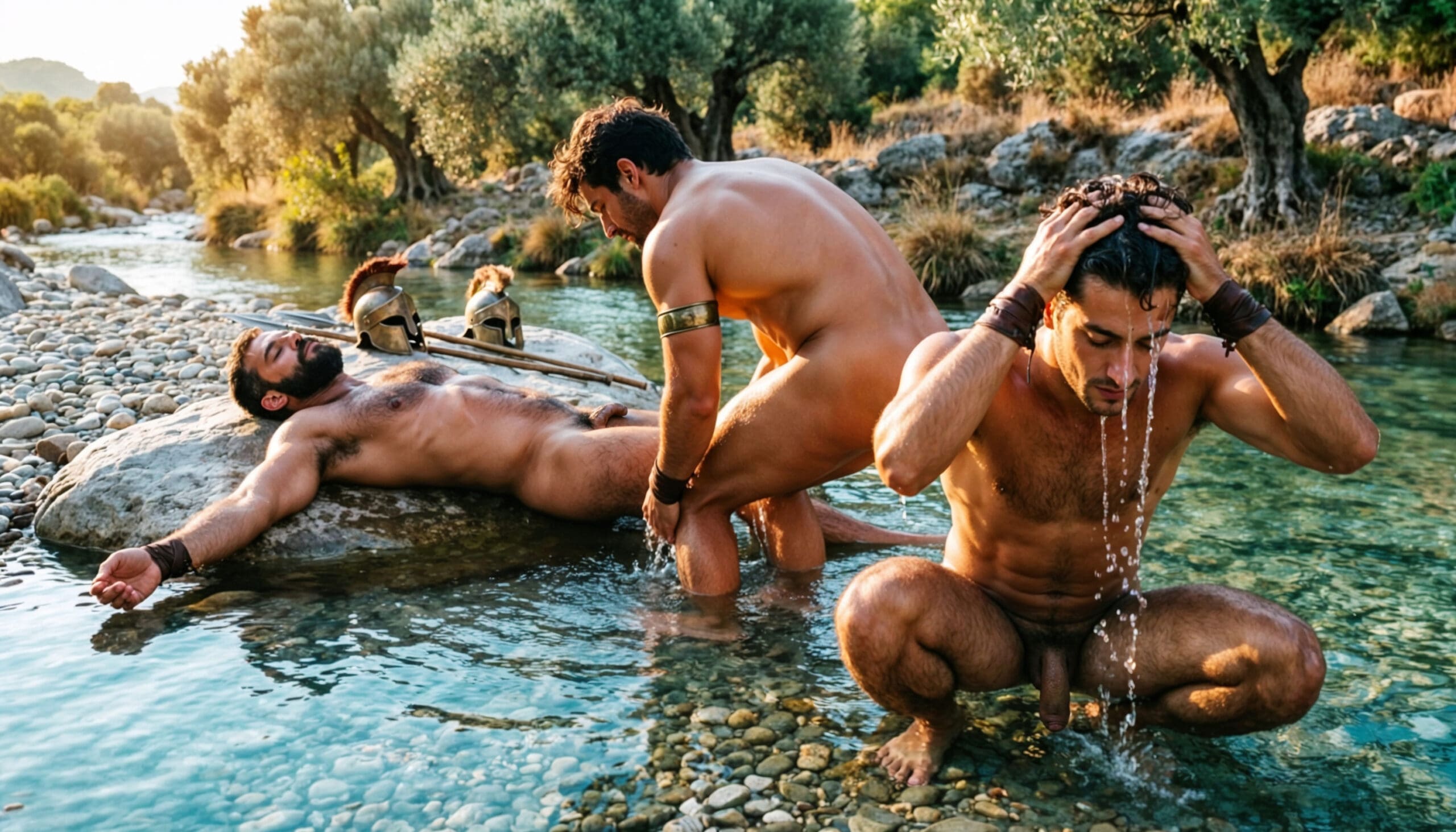
The Spartan Bred
Warriors in training, bodies pushed past exhaustion until nothing’s left to perform. Dust, sweat, and a proximity that stops asking permission.
MMA Sparring Partners
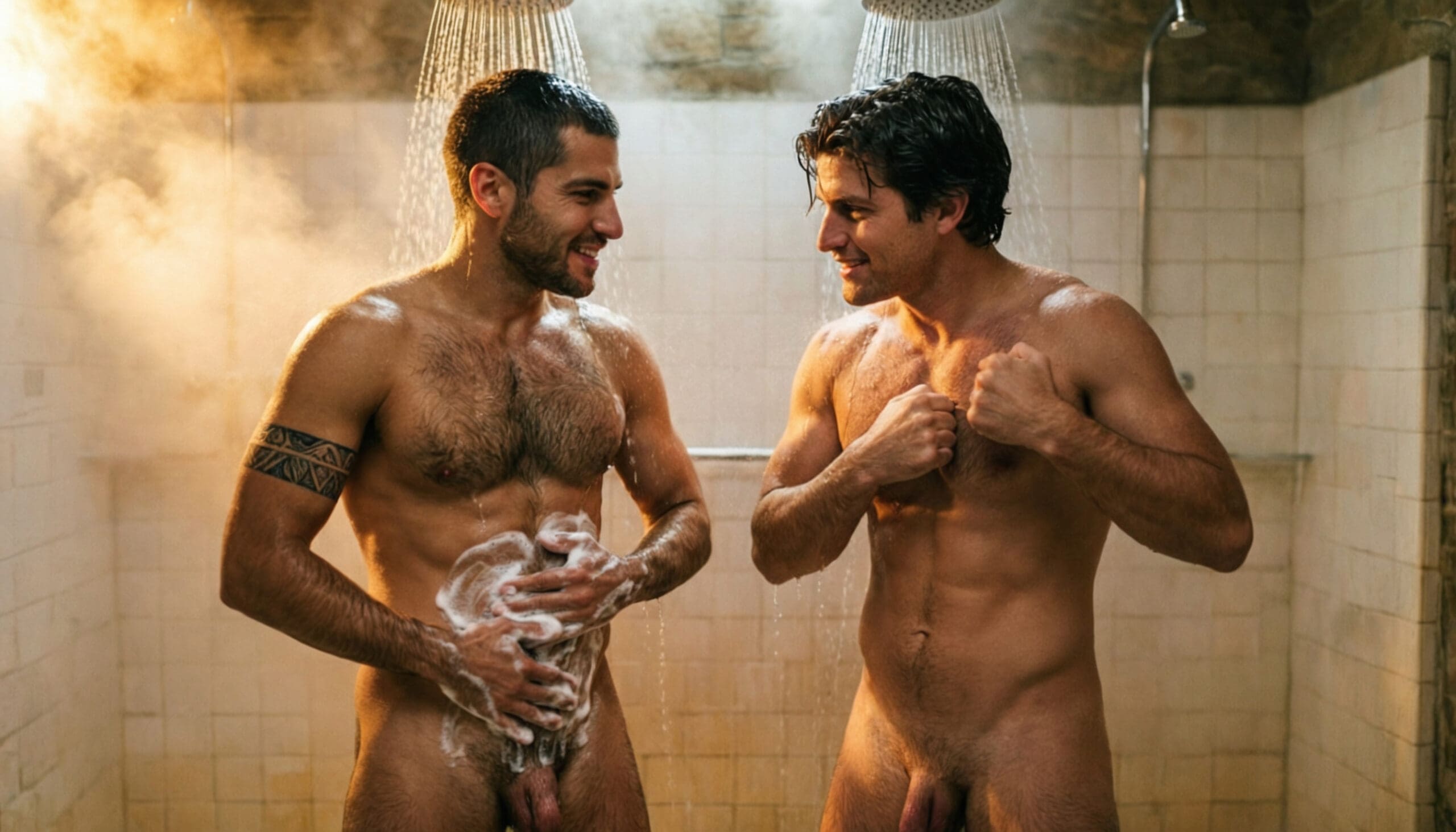
Two fighters, one mat, and the moment competition stops being about winning. Grip, weight, breath — closeness that started as a fight.

Auction of Prime Males
An auction that officially doesn’t exist. Men presented like the rarest lots in the room — catalogued, admired, sold to the highest bidder. Desire dressed as commerce.
Rio Bare Plumes
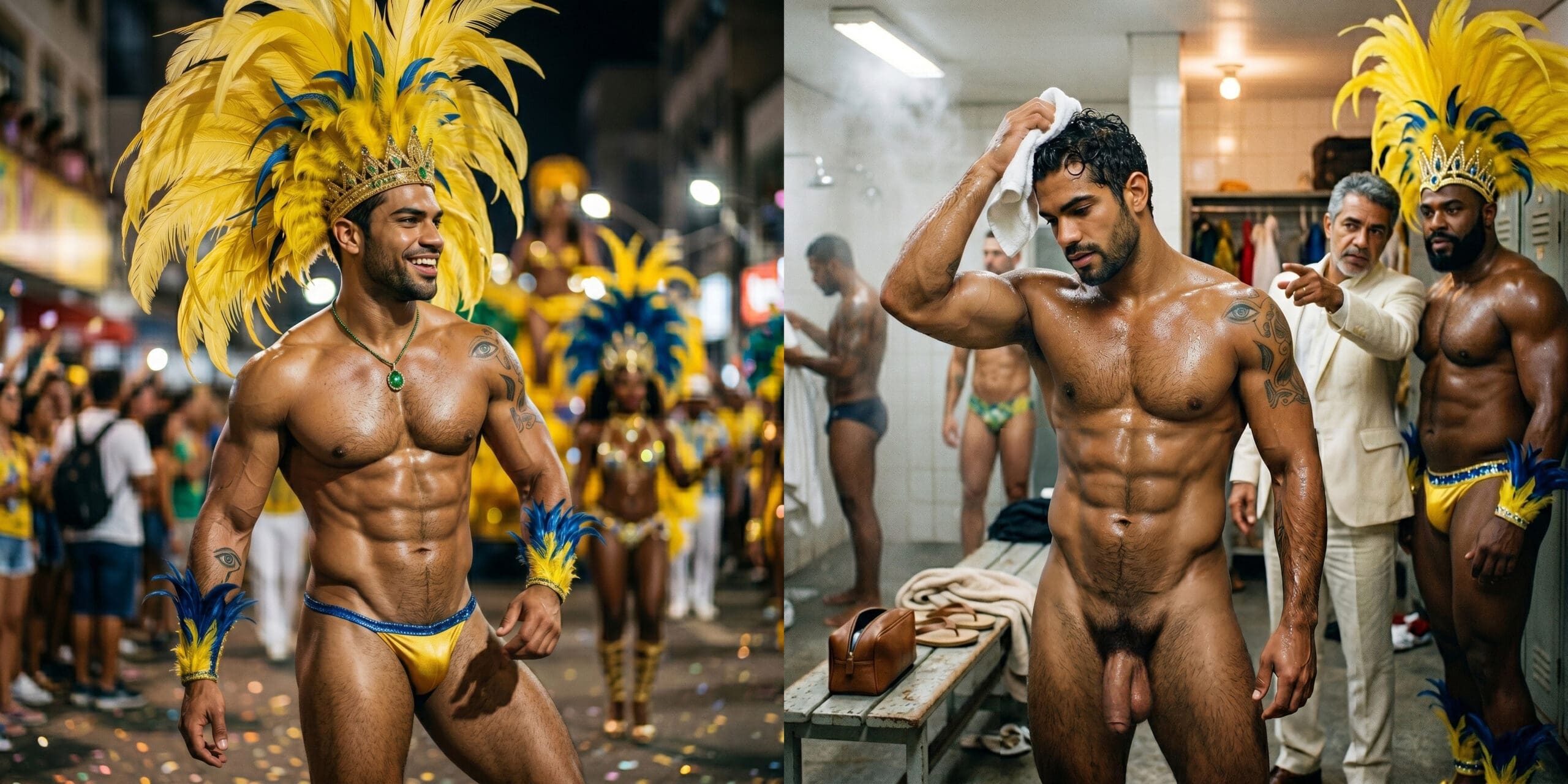
Every dancer, twice — once in full carnival plume, once with nothing left to perform for. Forty men, one Rio night, no costume in the second half.
Epics Uncut
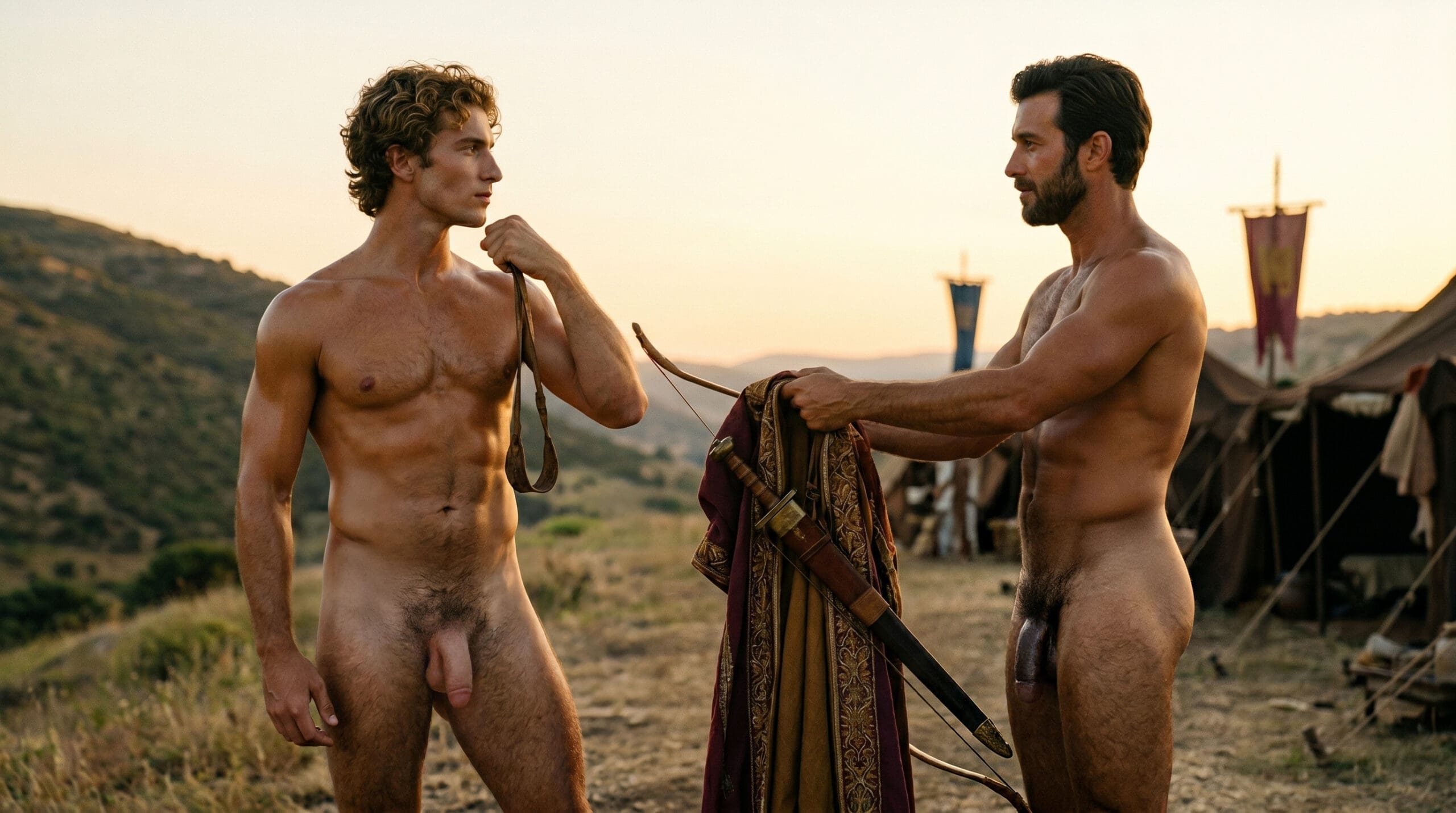
The ancient world the way it would have actually looked without the cuts — gods, warriors, myth staged at full, unsanitized scale.

The Favourite
Chosen for his beauty, dressed for the room, undressed for the man who chose him. Power, luxury, and a favorite who knows exactly why he’s there.
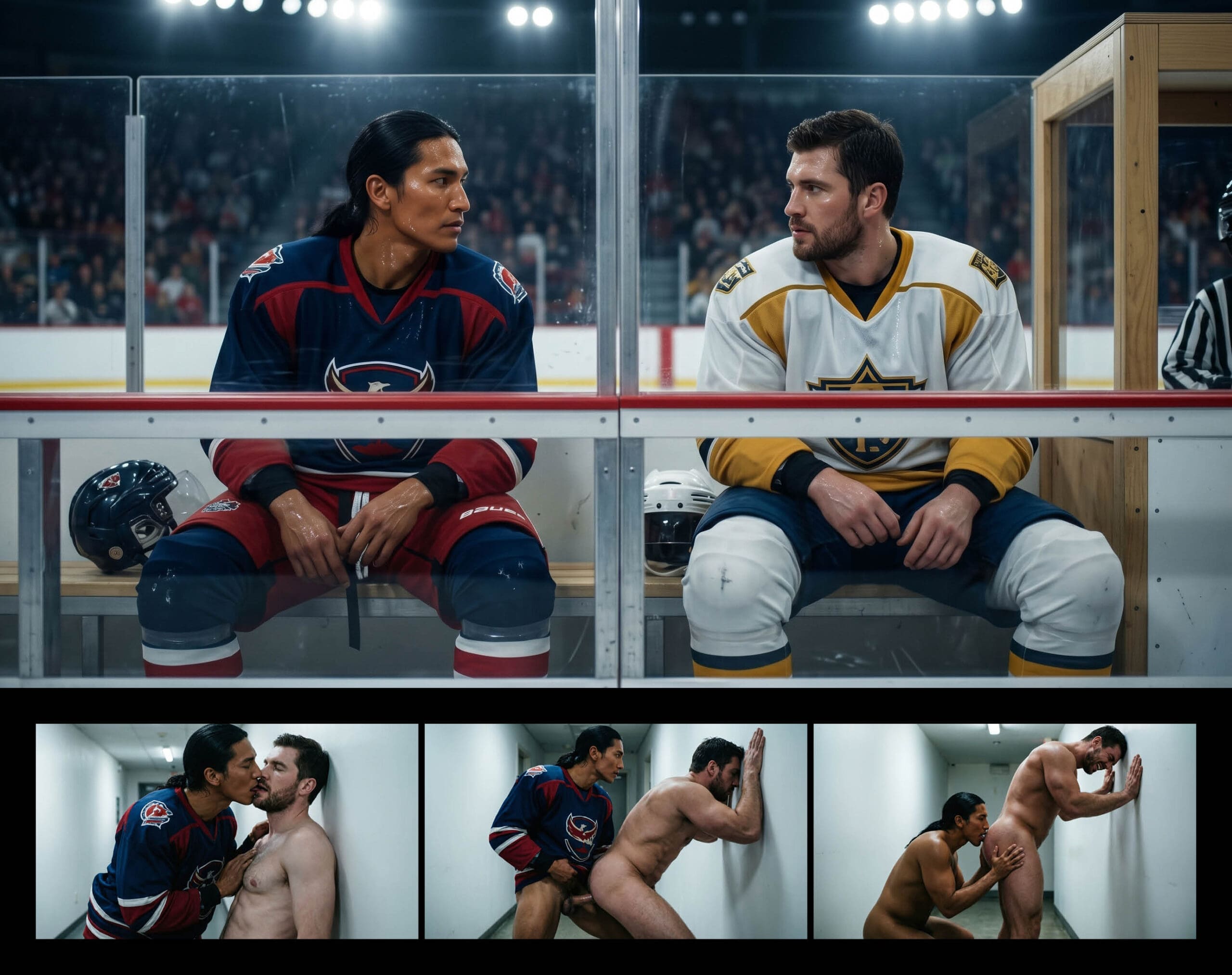
Heated Rivalries
Locker rooms, sidelines, the space right after the whistle. Competitive bodies caught at the exact moment rivalry turns into something else.
What Makes a Gay Erotic Art Series
A NUBRONZE series isn’t a folder of loosely related images. It’s a world held together by the same handful of things a good ongoing story needs: characters who stay themselves from one image to the next, a premise specific enough to generate dozens of images without repeating itself, and a visual signature — light, location, mood — that makes a single frame recognizable as belonging to that world before a caption ever confirms it.
The characters carry the most weight. Two men can appear across an entire series and never be interchangeable: different builds, different histories written into small physical details that stay locked from image to image, different ways of holding a camera’s attention. That consistency is what lets a series accumulate meaning the way a single striking image never can — the tenth photograph of a recurring character says something the first one couldn’t, because there’s now a body of work behind it, a history the viewer has actually watched build.
The premise does the rest of the work. An auction that officially doesn’t exist. Two fighters who keep finding reasons to end up on the same mat. A resort built entirely around watching and being watched. Each series runs on one idea, specific enough to sustain image after image without the concept going slack — the same discipline a good ongoing series in any medium needs, applied here to a body of work that’s frankly, unapologetically erotic rather than incidentally so.
Light and place matter just as much, even if they get noticed last. A series shot in hard tropical sun reads differently from one built entirely indoors under something closer to studio control, and that difference isn’t accidental — it’s chosen once, at the start, and held for as long as the series runs. A recurring location does some of the same work a recurring character does: it becomes a character in its own right, something a viewer half-recognizes on sight, another layer of continuity underneath the obvious one.
Not every series builds the same way. Some are genuinely narrative — the same men returning image after image, a relationship or a rivalry actually developing over time, closer to watching a story unfold one still frame at a time than browsing a gallery. Others run on concept instead of plot: a premise pushed as far as it can go, an idea for what a genre or a scenario would look like with nothing held back — the epic staged the way it would have actually played out, unsanitized. Most series land somewhere between the two, and the strongest ones do both at once: a real story carried by men who feel specific and consistent, inside a concept striking enough to justify the whole world existing in the first place.
Where a Series Goes That an Issue Can't
A magazine dossier gets a handful of pages and has to make its case quickly. A series has no such limit — some run to dozens of images, published week over week on Fanvue and DeviantArt rather than delivered all at once in a single PDF. That’s the real difference: an issue is a finished object, read start to finish and then set down; a series is closer to a running world, one a reader can follow as it grows, image by image, over months rather than in one sitting.
The two aren’t unrelated. A series occasionally surfaces inside a magazine issue as a feature dossier — a condensed, single best version of a world that otherwise keeps expanding on its own outside the page count. Reading the issue version doesn’t require following the series, and following the series doesn’t require having read the issue. Each stands on its own; together, they’re two different ways into the same gay erotic art, built at two different speeds, for two different kinds of attention.
Every series follows the same standard NUBRONZE holds everywhere else — full frontal nudity throughout, real intimacy between men handled without flinching. What counts as explicit shifts by platform: Fanvue carries the complete, uncensored work, while previews shown elsewhere hold back from that threshold. Either way, what’s published is never compressed or downgraded to fit the platform — Fanvue and DeviantArt both carry the same files, full resolution, regardless of how explicit a given image gets. The premise changes from one world to the next. What NUBRONZE is willing to show, and how honestly it shows it, doesn’t move an inch between them. A new series starts because it earned its own premise, not because an existing one ran out of ideas and needed a rename.
Following a series is simpler than it might sound. Each one has its own regular slot across Fanvue and DeviantArt, so new images land on a rhythm rather than at random — no need to guess when a world is due for an update. Some series are still early, a handful of images in; others have grown large enough that a new viewer could spend an afternoon just catching up on the backlog before a single new image drops. Both are equally the point. NUBRONZE isn’t building one long-running property and calling it a catalogue — it’s building a shelf of separate gay erotic art series, each one free to run as long as it has something left worth showing, and to end honestly once it doesn’t.
What's the difference between a gay erotic art series and a NUBRONZE issue?
An issue is a finished, hundred-page magazine — one cover story plus several other feature dossiers and recurring sections. A series is an ongoing gallery, published image by image, with no fixed endpoint. Some series surface inside an issue as one of those features; neither one requires the other.
How often do new images get added to a series?
There's no fixed schedule. Series update when there's new work worth publishing, not to hit a calendar.
How do I access images from a series?
Through a Fanvue subscription, or by buying a series outright — each one has its own complete package, priced separately, with a direct link on its page.
Do series have a set order?
Some do — the narrative ones build a relationship or a rivalry over time. Others don't; concept-driven series can be opened at any point without losing anything.
Do series ever end?
Yes. A series runs as long as it has something left to show, then ends — nothing gets padded out with filler just to keep going.